


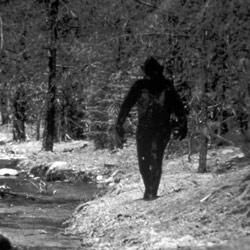
The figure was never conclusively found. There are only stories and photos of blurry still questionable authenticity. But why the myth of the great apes were present in different cultures?
Large, hairy creatures that walk like humans, which is said to hide in the forests or areas difficult to reach. In North America they are called Bigfoot or Sasquatch. In Asia, especially the Himalayan region, they called the Yeti or the terrible snowman. In South America, the Amazon region, there is the term Mapinguari, was his nickname is the Yowie in Australia.
Is it true that they exist in the real world? An old Sherpa in the Himalayas once said, "Yeti is exists behind all human minds, only those who are blessed are not haunted by it."
There or not, many cultures have stories about the hairy man. Their appearance in North America and Asia has been discussed since the early 1800's. Although already a lot of stories, photos, and their footprints, but so far there has never been scientific evidence that they exist. Never found droppings, bones, and it's body, alive or dead.
There or not, many cultures have stories about the hairy man. Their appearance in North America and Asia has been discussed since the early 1800's. Although already a lot of stories, photos, and their footprints, but so far there has never been scientific evidence that they exist. Never found droppings, bones, and it's body, alive or dead.

Reports of the first documented bigfoot is found traces of a Canadian trader in 1811. The name of bigfoot then widely known after the media reports about the large footprints found in Bluff Creek, California, 1959. While the most famous bigfoot photo taken in 1967 though still debated its authenticity.
Recently, the seeker bigfoot like getting a new hope when the bigfoot hair found in the Yukon Teslin residents. They claim to find the hair around a large traces left by the creature as high as 3 meters, like humans, are seen at their home page earlier this month.
Recently, the seeker bigfoot like getting a new hope when the bigfoot hair found in the Yukon Teslin residents. They claim to find the hair around a large traces left by the creature as high as 3 meters, like humans, are seen at their home page earlier this month.
Geneticists from the University of Alberta and hair DNA test to find out who the owner is. Researchers suspect the hair actually comes from a bear or bison which are common in the Yukon. However, when found it was something new, we may be closer to the disclosure of the mystery of bigfoot. The results of the study was announced last week.
Whatever the results of research the University of Alberta, the bigfoot myth, do not need scientific facts to always attract people's attention.
Myth or real?
Bigfoot is something tangible to those who claimed to have seen it. But opinion is divided. Some people believe in bigfoot as flesh blooded creatures, while others - including indigenous tribes in America - believe the spirits who manifest themselves to humans in times of distress.
Ralph Gray Wolf, a member of the Indians Athapaska of Alaska, said, Sasquatch appeared to help the groups that are having problems. They bring the message needs to be a change.
The same is also found in Britain, linked with the legend that has been heard for centuries. Two years ago some researchers on an expedition to the Bolam Lake, near Newcastle. They trace the appearance of being tall and dark, touted since the 18 months before. One day on the lush banks of the lake, six of the group finally saw what they called Beast of Bolam.
Myth or real?
Bigfoot is something tangible to those who claimed to have seen it. But opinion is divided. Some people believe in bigfoot as flesh blooded creatures, while others - including indigenous tribes in America - believe the spirits who manifest themselves to humans in times of distress.
Ralph Gray Wolf, a member of the Indians Athapaska of Alaska, said, Sasquatch appeared to help the groups that are having problems. They bring the message needs to be a change.
The same is also found in Britain, linked with the legend that has been heard for centuries. Two years ago some researchers on an expedition to the Bolam Lake, near Newcastle. They trace the appearance of being tall and dark, touted since the 18 months before. One day on the lush banks of the lake, six of the group finally saw what they called Beast of Bolam.
"What they see is not a bigfoot or Sasquatch. He is a hazy figure in the trees, and more like ghosts than fleshy creatures. Moreover, if the creature's fleshy, English is not a suitable place for them, "said Richard Freeman, of the Centre for Fortean Zoology, which one of his friends to witness the apparition.
It makes sure, the legends of bigfoot - also the Big Grey Man of Ben MacDhui in Scotland and the Grey King in Wales - is actually a paranormal creatures. "They're not a ghost or spirit of a dead creature. I think they are more complex than that. "
In his journey as a professional monster hunter, Freeman has traveled all over the world collecting stories and clues about the mysterious creatures. He found in many cultures, there are types of creatures that always appear. He calls it as a general model of international monster, which include a giant dragon and other reptiles, creatures great apes such as Sasquatch and Yeti, tiny people like short people and dwarves, giant birds, as well as dog and cat imitation.
It makes sure, the legends of bigfoot - also the Big Grey Man of Ben MacDhui in Scotland and the Grey King in Wales - is actually a paranormal creatures. "They're not a ghost or spirit of a dead creature. I think they are more complex than that. "
In his journey as a professional monster hunter, Freeman has traveled all over the world collecting stories and clues about the mysterious creatures. He found in many cultures, there are types of creatures that always appear. He calls it as a general model of international monster, which include a giant dragon and other reptiles, creatures great apes such as Sasquatch and Yeti, tiny people like short people and dwarves, giant birds, as well as dog and cat imitation.
"Maybe these monsters similar to the creatures that our ancestors encountered. Perceptions about the creature's ancestors left in our minds. Well, under certain conditions, the creatures seem to appear in front of us. "
"Being in mind the fact that often arise. If we believe in the existence of something, then what we see is often manifest as what we believe, "Freeman said.
For example, in experiments in Loch Ness, the researchers a piece of wood floating in the lake known inhabited by monsters. Wood put the evening when a group of visiting tourists. The result, most visitors are sure you have seen Nessie, the inhabitants of the lake!
Those people seem to already have a conviction about the existence of monsters, making it easy for them to say, "I saw Nessie, or bigfoot, or the Yeti," when they see something.
Well, the last sighting of Sasquatch in the Yukon, the results of laboratory studies indicate that the feathers left behind the monster turns out to bison fur. But like the previous events, stories and bigfoot sightings expected to continue to emerge. The search will continue. And the truth of existence will remain in the eyes of those who've seen it.
"Being in mind the fact that often arise. If we believe in the existence of something, then what we see is often manifest as what we believe, "Freeman said.
For example, in experiments in Loch Ness, the researchers a piece of wood floating in the lake known inhabited by monsters. Wood put the evening when a group of visiting tourists. The result, most visitors are sure you have seen Nessie, the inhabitants of the lake!
Those people seem to already have a conviction about the existence of monsters, making it easy for them to say, "I saw Nessie, or bigfoot, or the Yeti," when they see something.
Well, the last sighting of Sasquatch in the Yukon, the results of laboratory studies indicate that the feathers left behind the monster turns out to bison fur. But like the previous events, stories and bigfoot sightings expected to continue to emerge. The search will continue. And the truth of existence will remain in the eyes of those who've seen it.


